.svg)
Sell your fleet on Expedia Group.
Booked with the flight. Unlocked with a phone.
Expedia Group's things-to-do inventory connects over OCTO—the open connectivity standard for tours and activities—and Levy ships a working OCTO supplier API. Every availability request is answered against your live fleet, every booking becomes a real Levy reservation, and the traveler unlocks a connected scooter, bike, or car the day they land.
Trip to the coast
Sep 14 – Sep 21 · 2 travelers
Battery
96%
Zone
In Bounds
Return
Sep 21
Booked 74 days before arrival. The availability behind it was live then, and it is still live now.
One connected operating path
Expedia Group to Levy to the vehicle.
OCTO supplier API
Expedia Group
Adds the activity to a trip planned weeks or months ahead
Reservation and fleet system
Levy Fleets
Serves future calendar capacity and rechecks live inventory at booking
Physical fulfillment
Connected vehicle
Remains attached to the reservation through the arrival date
Why This Channel
They already have
a flight and a hotel.
Expedia Group is a trip-context channel. The traveler is not starting from “what is there to do somewhere.” They are standing inside a trip they have already paid for, adding the pieces that make the week work.
That changes what your inventory has to do. The booking arrives early, it covers days rather than hours, and it is usually for a group. Levy is built for exactly that shape.
Bought inside a trip, not a search
The traveler is not idly comparing activities. They have a departure date, a confirmation number, and a gap in the itinerary they are actively filling. Intent at that moment is about as strong as travel demand gets.
Booked far in advance
Trip planning runs months ahead of the trip. A booking taken in March for a September pickup is only worth having if the availability behind it is still honest in September.
Mobility for the whole stay
They land at a hotel with no car and a week to fill. That is a multi-day rental, not a two-hour joyride — and multi-day is where a connected vehicle stops being a nice touch and starts being the only workable handover.
Parties, not solo riders
Trips are booked for two, four, six people in one transaction. The booking asks for several vehicles at once, and it has to either hold all of them or none of them.
Advance Bookings
Your calendar is live,
not last night's file.
Most connections publish inventory as a file and re-push it on a schedule. That is survivable for a tour that runs the same eight seats every morning. It is not survivable for a rental fleet where a vehicle can be sold, reserved, taken off the road, or moved to another location between two pushes—and the traveler is booking ninety days out.
Levy answers every request at request time. Capacity is your inventory caps, minus confirmed reservations, minus every in-flight hold—from other marketplaces and from Levy's own checkout. There is no second copy of the truth to drift away from the first one.
A single calendar request can span more than a year of dates, so a planner can paint the whole trip window at once.
The month rollup, the slot list, and the booking itself are all computed from the same availability engine.
7-Day E-Bike Rental
September · live capacity per day
Sep
8
Sep
9
Sep
10
Sep
11
Sep
12
Sep
13
Sep
14
Sep
15
Sep
16
Sep
17
Sep
18
Sep
19
Sep
20
Sep
21
Sep
22
The Difference
Every other booking system stops at the booking.
FareHarbor, Bokun, Rezdy and the rest hand you a confirmed reservation and a traveler name. What happens next is your problem: someone has to be at the shop when the flight lands, find the right vehicle, hand over a key, and hope it comes back on day seven. Levy is the only reservation system where the booking is attached to a connected vehicle—so the rest of the rental runs itself.
A traveler lands at 11pm and rides away on a bike they booked in March.
The whole chain—marketplace booking, reservation, check-in, unlock, ride, return—is one system. A booking can become a completed rental without a staff member touching it, which is what makes an arrival-day pickup on a delayed flight a non-event instead of a phone call.
Remote unlock at pickup
The traveler taps their phone at the vehicle. No counter, no key handoff, no staff member waiting on a flight that is running late.
Live GPS and telemetry
Location, battery, speed, and vehicle health streaming for the entire week the rental is out.
Geofencing
Define where the vehicle may go. Get alerted the moment it leaves the zone — which matters far more on a seven-day rental than a two-hour one.
Automatic ride billing
Overtime, extensions, and per-minute usage bill themselves against the rental instead of becoming an awkward conversation at return.
Return proof
Timestamped end-of-ride photos and location, so a dispute with a traveler who has already flown home has an answer.
Remote lock
Close out the rental from the dashboard. The vehicle secures itself, wherever it was left.
The Integration
You stay the supplier. Levy is the reservation system.
Levy takes the slot FareHarbor and Bokun occupy—the system a marketplace queries for availability and books against. Your business connects under its own Expedia Group supplier agreement, with its own contract terms and its own product codes. Levy implements the OCTO surface underneath it: supplier handshake, product catalog, availability, month-level calendar, booking, confirmation, and cancellation.
Capacity is taken at reserve, not at confirm
The moment a traveler starts paying, the vehicle is held—inside a single locked database transaction, so two marketplaces racing for the last scooter cannot both win. Confirm turns that hold into a real reservation. The reservation is created before the hold is released, so nothing slips into the gap.
Abandoned carts self-clear
If a traveler walks away mid-checkout, the hold expires on its own and the capacity returns to inventory. No stranded vehicle, no manual cleanup.
Idempotent by design
The reseller's own reference—resellerReference or an Idempotency-Key—is the key. A retried call returns the original booking instead of selling a second vehicle.
No double entry
A confirmed booking becomes a real Levy reservation on the spot. Nobody re-keys it into a second system, so nothing gets mistyped, missed, or discovered on arrival day.
Sells both shapes of product
Fixed-duration rentals—a “7-day e-bike” where the marketplace sends only a start date and your mapping supplies the duration. And per-person timed tour departures, sold by seat against a real recurring schedule. Most operators in a destination run both, so both are first-class.
The Technical Flow
Marketplace tap to reconciled money, in eight steps.
This is the actual sequence, not a marketing abstraction of one. Two-phase OCTO booking means the capacity is committed while the traveler is still paying, and every step below either holds inventory, hands it back, or turns it into a rental that runs itself.
Traveler books on the marketplace
They pick a date, a start time and a quantity inside a trip they are already paying for. Nobody on your team is in the loop yet, and nobody needs to be.
Marketplace checkoutLevy answers availability live
Your inventory caps, minus overlapping confirmed reservations, minus every in-flight hold — from other marketplaces and from Levy’s own checkout. Computed on the request. There is no export sitting around to go stale.
POST /api/octo/v1/availabilityReserve takes the capacity
Reserve, not confirm. The recount and the hold are written inside one locked Postgres transaction, so two marketplaces racing for the last vehicle cannot both win. The booking now carries its own expiry.
POST /api/octo/v1/bookingsConfirm, once and only once
The traveler has paid the marketplace. Levy claims the reserved-to-confirming transition under a row lock, so exactly one confirm can ever create a reservation. Confirming twice returns the same booking unchanged.
POST /api/octo/v1/bookings/{id}/confirmA real Levy reservation exists
With the money split recorded on it — gross, commission, net. The hold is consumed only after the reservation exists, so nothing can slip into the gap between releasing one and creating the other.
Reservation + channel bookingCheck-in goes out
A link that collects the contact details the marketplace never forwarded and gets your rental agreement signed before pickup. Deliberately best-effort: the traveler has already paid, so a check-in that fails must never fail the booking.
/checkin/{token}The vehicle unlocks
On arrival day, from the traveler’s phone. Same connected vehicle, same telemetry, same geofences and the same ride billing your direct rentals already run on.
Rider app → vehicleThe statement reconciles
Weeks later the remittance arrives. Every line is checked against the booking it claims to pay for, and a confirmed booking the statement left out entirely is flagged rather than quietly lost.
Matched · Variance · Unmatched · MissingGET
/supplier
GET
/products
POST
/availability
POST
/availability/calendar
POST
/bookings
POST
/bookings/{id}/confirm
GET
/bookings/{id}
DELETE
/bookings/{id}
Inside a locked Postgres transaction — the recount happens in the same transaction as the write, not as read-then-write in application code.
An Idempotency-Key header, or the reseller’s own reference, keys the booking. A retried reserve hands back the booking that already exists.
Never before. Releasing first would open a window where a competing request could take the capacity you just sold.
A hold that is never confirmed expires on its own and a scheduled sweep returns its capacity to inventory. No stranded vehicle, no manual cleanup.
Groups & Multi-Day
A party of four. For a week.
Package travelers do not book one scooter for ninety minutes. They book the family, for the stay. That is a harder inventory problem than a single seat on a walking tour, and it is the one Levy was built to solve.
Four vehicles, one atomic hold
A party booking asks for a quantity, not a vehicle. Levy checks and takes the whole quantity in one locked transaction. Either all four are yours for those dates or the request is refused — never two now and a phone call later.
Days, not hours
A multi-day rental product blocks the vehicle across the full range, and every overlapping reservation is subtracted from what the next channel sees. A week-long booking cannot be quietly double-sold on day four.
Per-person or per-vehicle
Tour departures price and count by traveler. Rentals price and count by vehicle. The mapping declares which one a product is, so a party of six books six seats on a tour and three tandems on a rental without anyone doing arithmetic in their head.
Cancellations hand capacity back
A cancelled booking releases what it held — pooled rental capacity and tour seats alike. A trip that falls apart in July does not leave your September calendar looking full.
The hold is visible to every channel at once
While a party checkout is in progress, the vehicles it is holding disappear from what every other channel can see—including Levy's own storefront and your walk-up counter. That is why capacity is taken at reserve rather than at confirm: it is the difference between an oversell being unlikely and an oversell being impossible.
Payment fails or the traveler walks? The hold expires and all four return to inventory.
The Money
Know exactly what you are owed.
A marketplace booking is paid—just not through your card processor. The traveler pays the marketplace, the marketplace keeps its commission, and the rest arrives weeks later on a statement. Levy records all three figures on every booking, so the gap between what the traveler paid and what lands in your bank is never a mystery.
Commission or fixed net rate
Some contracts give the marketplace a percentage of what the traveler paid. Others owe you a fixed amount per unit no matter what it retails for. Levy supports both, and the split always reconciles to the cent—one side is derived from the other rather than rounded independently. The identity is enforced by a database constraint, not just by application code, so a split that does not balance cannot be stored at all.
And when a marketplace reports a gross below your contracted net rate, Levy records the anomaly and preserves what they actually sent—so the statement dispute is argued from their number, not a rewritten one.
Gross
traveler paid
$8,410
Commission
channel retains
$1,682
Net
you are owed
$6,728
EXP-88214
7-Day E-Bike, 2 units
EXP-88240
Coastal Tour, 4 pax
EXP-88261
Scooter, 3 days
EXP-88274
7-Day E-Bike, 4 units
Every line is checked against the booking it claims to pay for. A corrected statement can simply be re-fed—re-importing replaces its own lines instead of double-counting.
Ties to a booking and the money agrees. Nothing to do.
Ties to a booking but the money disagrees — usually a changed commission or a refund processed on their side.
The statement bills a reference with no booking behind it.
You hold a confirmed booking the statement left out entirely. This is the one that quietly costs money.
Control
A marketplace should
not run your fleet.
Distribution is worth having only if you stay in charge of it. Levy gives you the guardrails: how much inventory a channel can touch, exactly what each product code sells, and what a traveler has to complete before a vehicle unlocks.
Traveler check-in that does not block
Marketplaces forward very little — often a first name and nothing else. Levy issues a check-in link that collects the missing contact details and gets the rental agreement signed before pickup, and each traveler becomes a distinct customer record rather than collapsing onto one shared guest profile. It chases the missing data; it never turns away a traveler who already paid, and it never asks for payment twice.
Per-channel inventory ceiling
Cap how much of the fleet a single marketplace may consume. Advance bookings are valuable precisely because they land early — but not if they eat every vehicle for high season before your own website and your walk-ups get a look.
Explicit product mapping
Every product and option code maps to a specific vehicle model or tour schedule, with duration and start times for rentals. An unmapped code is refused outright rather than guessed — because guessing hands a traveler the wrong vehicle at the end of a flight.
Switch it on when you are ready
A connection accepts real API calls the moment it exists, so you can watch it work before you open the taps. Flip it to live whenever you like, pause it in one click if you ever need the inventory back.
How It Works
Three steps to distribution
Connect the channel
Open Distribution channels in your dashboard, add an OCTO connection, and set the commission terms your contract specifies. Levy mints an API key for your account — yours alone, shown exactly once, stored only as a hash.
Map your products
Point every product and option code at a vehicle model or a tour schedule, with duration and start times for rentals, and set an inventory ceiling if you want one. Nothing sells until the mapping exists, which is deliberate.
Go live and stay hands-off
The channel reads live availability and books against it. Reservations, check-in links, unlock, billing, and the money trail all run without anyone re-typing a thing.
One build, every marketplace
OCTO is the open connectivity standard the major activity marketplaces read—Expedia Group, Viator, GetYourGuide, Klook, Headout, Tiqets and more. One conformant supplier API, one set of inventory rules, one money model behind all of them. Adding the next channel is a mapping exercise, not another integration project.
The Rest of the Platform
A sales channel,
not a second system.
Marketplace bookings land in the same fleet you already run on Levy. Same vehicles, same zones, same dashboard, same rider app, same billing—now with trip-context demand attached to it.
Levy Fleets starts at $250/mo, and distribution channels are part of the platform rather than a bolt-on you license separately.
Included with your fleet
Everything a marketplace booking needs after the confirmation already exists, because it is the same machinery your direct rentals run on.
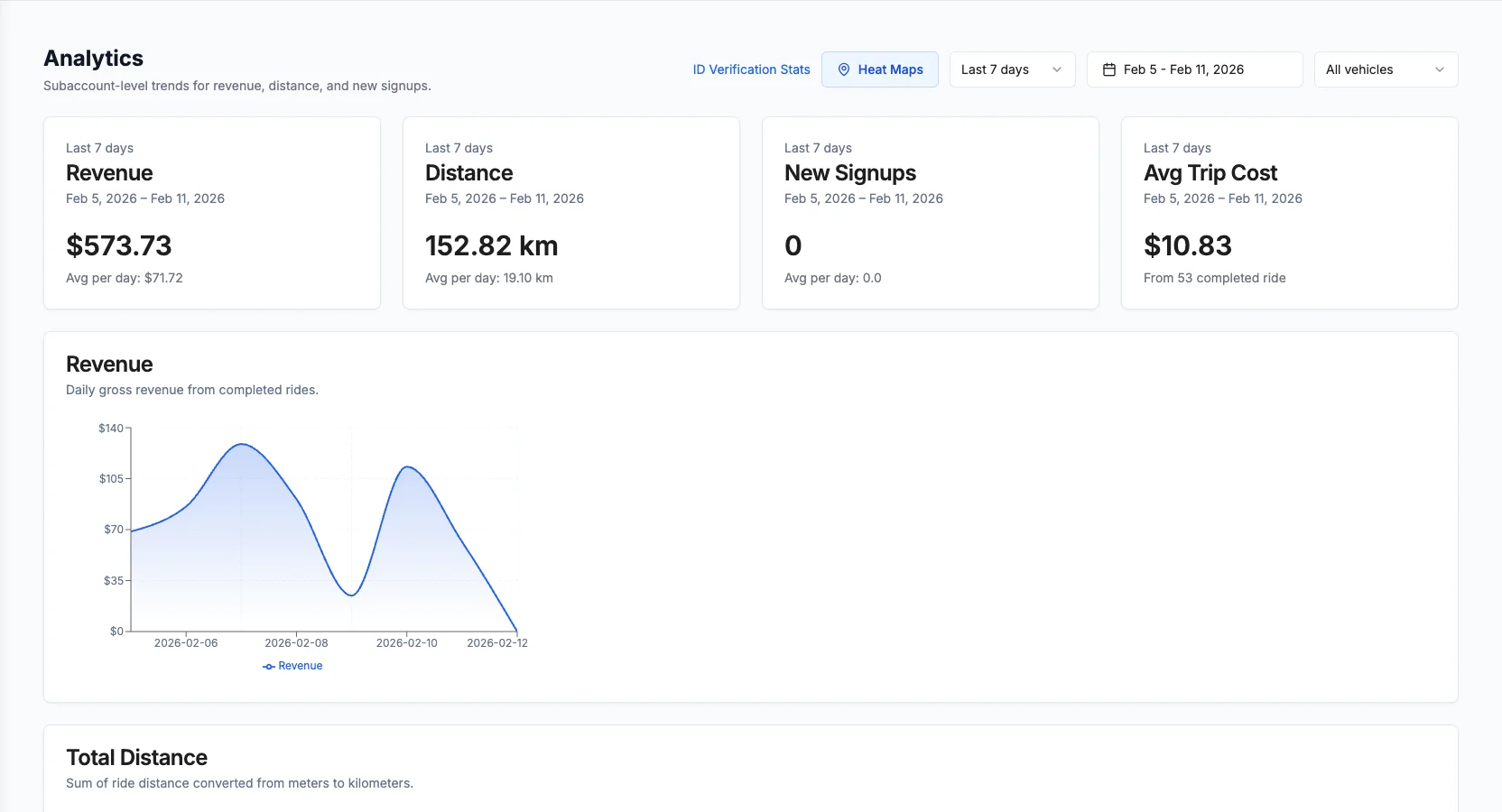
Operator implementation snapshot
A long-lead booking remains connected to the day-of-ride operation.
The operator gets trip-context demand without maintaining a separate future-inventory spreadsheet or reconstructing the booking at arrival.
Without the connected workflow
A booking made months ahead can drift away from current fleet availability, pricing, or the operational record used on pickup day.
With the Levy connection
- Future capacity comes from the same inventory rules
- Party size and duration stay on the reservation
- Day-of-ride status appears in the same dashboard
Forward demand and fleet state
Live Levy Fleets operator interface
Related Integrations
One OCTO connection reaches all of them.
Expedia Group, Tiqets, Headout, Klook and GetYourGuide all read OCTO. That is the point of building against the standard properly rather than one marketplace at a time: the same conformant supplier API, the same live availability and the same money model serve every one of them. Adding the next channel is a mapping exercise, not another integration project.
The same OCTO supplier API, a different buying moment: a mobile-ticket traveler standing outside a museum, riding within the hour.
The in-destination, same-day end of the spectrum — curated listings for the two hours a traveler suddenly has free.
Also an OCTO consumer, with its strongest reach across Asia-Pacific travel demand.
Two-phase booking over the same standard, for planned trips and same-day bookings alike.
The free complement to this page. A published GBFS feed puts your vehicles in trip-planning apps with no commission and no marketplace in the path — walk-up demand next to prebooked demand.
Hotel demand at the source. Guests already on property book a vehicle and bill it to the room folio, which is the same traveler this page reaches one step earlier in the trip.
Marketplaces, channel managers, property systems and open data feeds — the full list, and which one fits the way you already sell.
See the Expedia integration in action
Tell us how you sell today. We'll walk you through the Expedia connection — live availability, automatic reservations, and keyless handoff.
Levy Fleets is an independent fleet management and reservation platform. Expedia, Expedia Group, Viator, Tripadvisor, GetYourGuide, Klook, FareHarbor, Bokún and Rezdy are trademarks of their respective owners, named here only to describe how Levy connects to or compares with those systems. Levy Fleets is not affiliated with, certified by, or endorsed by any of them. Connecting a marketplace requires your own supplier account and contract with that marketplace.