
Ideias e recursos para gestão de frotas
Guias, tendências do setor e dicas práticas para lançar e ampliar operações de frotas de aluguel.
Como iniciar um negócio de transporte por aplicativo: um guia para operadores
Um guia prático para iniciar um negócio de transporte por aplicativo: escolha do tipo de serviço, licenças e seguros, motoristas, veículos, tarifas, pagamentos, software e um checklist de lançamento.
Serviço de transporte sob demanda com carrinhos de golfe para resorts, hotéis e comunidades.
Como operar um serviço de carrinhos ou transporte sob demanda em um resort, hotel ou propriedade residencial: por que é melhor do que circuitos fixos e chamadas de rádio, pontos de embarque, tarifas, motoristas e tempos de espera.
Software de despacho de táxis: o que procurar em um sistema de despacho e aplicativo de reservas
Guia do comprador para empresas de táxi: despacho automático versus manual, reservas por telefone, tarifas por taxímetro versus tarifas pré-definidas, conciliação de caixa, aplicativo do motorista e relatórios, com lista de verificação.
Aplicativo de transporte por aplicativo de marca branca versus desenvolvimento personalizado: como decidir
O que é necessário para criar um aplicativo de transporte por aplicativo do zero, as dificuldades que não aparecem na lista de recursos, quando uma solução personalizada faz sentido e o que perguntar aos fornecedores de soluções de marca branca.
Como implementar um programa de transporte seguro no campus ou um serviço de transporte sob demanda no campus.
Um guia prático para universidades e campi: área e horário de atendimento, critérios de elegibilidade, recursos de segurança, equipe de motoristas, viagens gratuitas versus pagas e como medir a demanda.
How to Earn From Your Car in New York With Peer-to-Peer Car Sharing
A plain guide for New York car owners: how peer-to-peer car sharing works, what state law requires, which costs to plan for, and how to set up a draft listing before launch.
Turo Alternatives for New York Hosts: How to Compare Your Options
Getaround left the US in 2025, and many New York hosts now rely on a single marketplace. Here are the realistic alternatives, what each involves, and the questions to ask before you add one.
Adding a Second Marketplace to Your Turo Fleet: Calendars, Pricing, Handoff, and Operations
A practical guide for New York Turo hosts adding a second car-sharing marketplace: the rules to check, how to avoid double-booking, how to price across channels, and how to run handoff and tolls for both.
Keyless Handoff: How to Share Your Car Without Meeting Guests
How keyless car-sharing handoff works for New York hosts: connected-car unlock, time-gated trip links, what to do when a remote unlock fails, and how to set up your car so you never have to meet a driver.
How Much Could Your Car Earn in New York? A Transparent Way to Estimate
Nobody can promise what your car will earn. Here is a step-by-step method New York hosts can use: daily price times booked days, minus the platform share and your real costs, with a clearly labeled example.
Preparing Your Car for Car Sharing Guests: A New York Host Checklist
Everything to do before you share your car in New York: paperwork, inspection and recalls, a mechanical check, cleaning, removing personal items and data, photos, handoff setup, and a listing that prevents problems.
Safety Recalls and Car Sharing: What New York Hosts Should Check Before Sharing
New York's car-sharing law bars sharing a car with an unrepaired safety recall and gives owners strict deadlines when a notice arrives. Here's how to check your VIN, what the law requires, and how to stay current.
Renting a Car From a Local Owner in New York: A Driver's Guide
How peer-to-peer car rental works in New York, what to check before you book, how keyless pickup and returns work, and the tolls, parking, and winter details that matter across the state.
Tolls, Congestion Pricing, and Tickets on a Shared Car in New York
How E-ZPass, Toll-by-Mail, MTA and Port Authority crossings, the Thruway, the Manhattan congestion relief toll, and camera and parking tickets work when you drive a shared or rented car in New York.
Parking, Pickup, and Return for a Shared Car in NYC
A practical guide to picking up and returning a shared car in New York City: street pickup, garages, alternate side parking, meters, keyless pickup, and how to avoid tickets and towing.
Weekend Trips From NYC Without Owning a Car
Where to go for a weekend from New York City when you do not own a car: which trips work by train or bus, which really need a car, and how to plan around tolls, parking, and park fees.
Car Sharing Versus a Traditional Rental in New York
An honest comparison of peer-to-peer car sharing and traditional car rental in New York: price, age rules, deposits, pickup locations, protection, tolls, and when each one makes more sense.
Car Sharing Upstate: Buffalo, Rochester, Syracuse, and Albany
What peer-to-peer car sharing looks like in upstate New York cities: pickup near airports and Amtrak stations, winter parking rules, lake-effect snow, the Thruway, and trips drivers take from each city.
Sharing a Car on Long Island and in Westchester
How peer-to-peer car sharing fits Long Island and Westchester County: driveway pickup, LIRR and Metro-North stations, airports, beach and station parking rules, parkways, and tolls, for drivers and hosts.
After Getaround: Options for New York Hosts and Drivers
Getaround ended its US car-sharing operations in February 2025. Here is what that changed for New York hosts and drivers, and the realistic options for sharing or renting a car now.
Golf Cart Rental Business Plan (2026): Startup Costs, Revenue per Cart & Break-Even
A working golf cart rental business plan built on real 2026 rate cards and real cart prices: what 20 carts actually cost, what they earn per day by setting, the full cost stack, and a break-even model for resorts, campgrounds, and beach towns.
Best Golf Cart Rental Software (2026): 12 Platforms for Resorts, Courses & Communities
Golf cart rental software compared for 2026: booking-only systems versus connected-fleet platforms with keyless unlock and geofencing. Published pricing, what each one actually controls, and which handles unattended self-serve rental.
Golf Cart Fleet Management: The 2026 Operator’s Guide
How resorts, courses, campgrounds and gated communities run 20 to 300 cart fleets in 2026: telematics options, keyless handoff, geofenced cart paths, charging and battery health, maintenance cadence, and what a cart actually costs to run per month.
LSV & Street-Legal Cart Rentals: The 2026 Profit Play for Resorts and Communities
What FMVSS 500 actually requires, why a street-legal LSV rents for more than a golf cart, and the state rules that decide whether the business works at all. With verified federal citations and real 2026 rate cards.
Best Golf Carts for a Rental Fleet (2026): 12 Models Compared on Fleet Duty
Most fleet golf cars are explicitly not street-legal, and most published specs come from dealers rather than manufacturers. We compared 12 models on manufacturer-sourced figures: LSV certification, battery chemistry, weight, warranty, IoT path, and cost per cart-day.
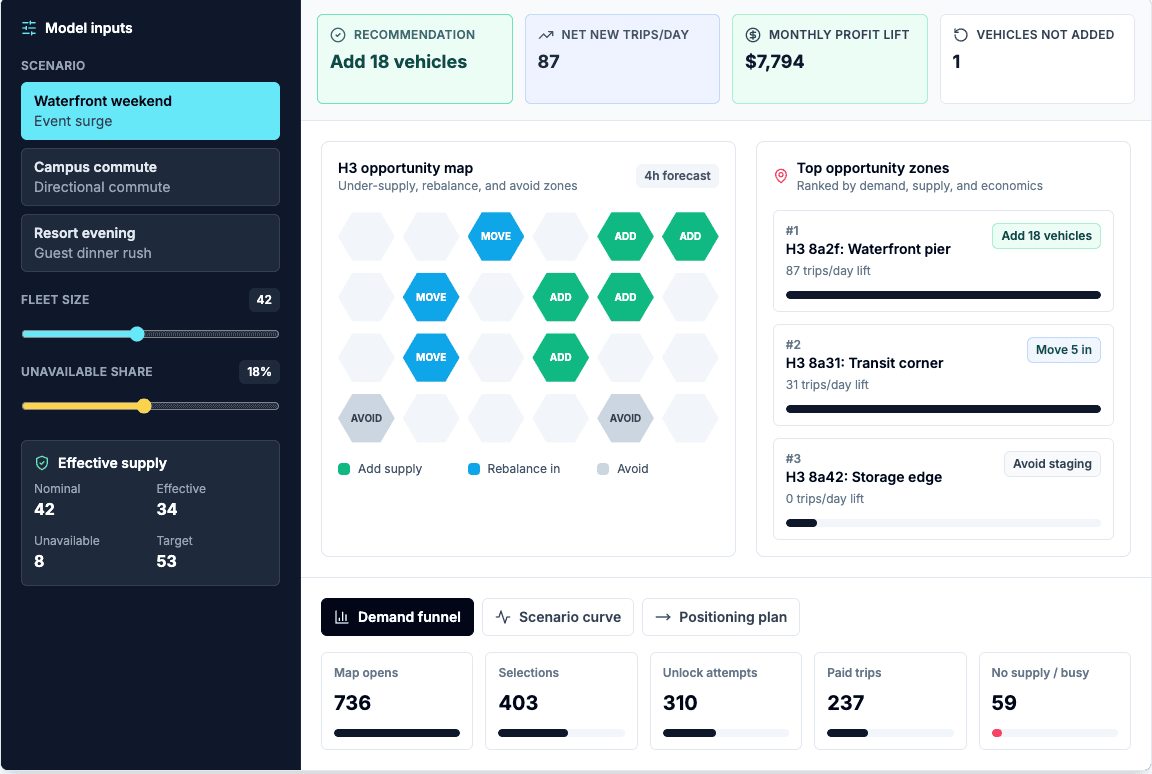
Demand Management for Electric Fleets: How Levy Turns Rider Intent Into Right-Sized Growth
Introducing Levy Fleets demand management and Growth Command Center: a data-driven way to forecast demand, prevent overdeployment, rebalance supply, and grow electric fleets with less street clutter.

Sidewalk Riding Detection Options for Scooter Fleets: Cameras, AI, GNSS, and Sensor Fusion
A practical guide to sidewalk-riding detection for shared scooter fleets, including Drover AI, Luna Systems, Segway Pilot, Bird/u-blox-style sensor fusion, operator-built systems, and lower-cost IMU approaches.
Electric Scooter Franchise vs. Independent: Costs, Models & How to Launch in 2026
What an electric scooter franchise actually costs, what you get (and give up), and why most operators are better off launching their own branded fleet on a turnkey platform with zero upfront software cost.
Scooter Fleet Unit Economics (2026): Revenue per Vehicle per Day, Cost per Ride and Break-Even
What a scooter actually earns and costs per day: revenue per vehicle per day, the full cost stack per ride, breakeven utilization, and worked P&L examples at 10, 30, and 100 scooters.
What a Scooter-Sharing App Costs to Build in 2026: Custom vs White-Label vs Revenue-Share
The real development cost of a scooter-sharing app: $100k to $300k and 8 to 18 months to build in-house, $8k to $25k for white-label, or $0 upfront on revenue share. Full cost breakdown, timelines and a decision matrix by stage.
Best ATOM Mobility Alternatives for Scooter & Bike Operators (2026)
A fair look at the best ATOM Mobility alternatives for shared micromobility operators — including turnkey, white-label, and enterprise platforms — with honest strengths, limits, and a comparison table to help you choose.
Best Joyride Alternatives: Scooter-Sharing Platforms Compared (2026)
The best Joyride alternatives for micromobility operators — turnkey, white-label, and enterprise platforms compared fairly, with honest strengths, limits, pricing models, and a recommendation by use case.
How to Start an E-Bike Rental Business in 2026: The Operator’s Playbook
A practical, numbers-first playbook for launching an electric bike rental business in 2026 — demand, business models, startup costs, choosing fleet-grade e-bikes, software and IoT, pricing, insurance, and how to scale.
Best Electric Scooters for a Rental Fleet (2026 Buyer’s Guide)
A buyer’s guide to commercial, fleet-grade electric scooters for rental and sharing operations — what makes a scooter fleet-grade, a spec comparison framework, picks by use case, and why consumer scooters fail in rental service.
Best Scooter-Sharing & Micromobility Software (2026): Platforms Compared
A fair, operator-to-operator roundup of the best scooter-sharing and micromobility software platforms in 2026 — turnkey, white-label, and enterprise options compared on pricing model, hardware approach, and best-fit use case.
Scooter Rental Insurance: What Fleet Operators Actually Need (2026)
A plain-English guide to insurance for a scooter, e-bike, or micromobility rental business — the coverages you actually need, what they cost, how waivers and the rider agreement fit in, and how IoT lowers your risk.
Scooter & Micromobility Permits and Regulations: An Operator’s Guide
How shared scooter and micromobility permitting and regulations work for operators — public right-of-way permits vs. private-property programs, what city permits typically require, and a compliance checklist before you launch.
Charging & Battery-Swap Operations for Scooter & E-Bike Fleets
A practical operations guide to keeping a shared scooter or e-bike fleet charged — the three charging models compared (field swap, cluster charging, docking), real per-ride cost, and how to design charging ops that protect uptime and margin.
How to Start a Moped-Sharing Business (E-Moped Rental Playbook 2026)
The operator’s playbook for launching an electric moped-sharing business — where moped-share fits, business models, startup costs, choosing fleet e-mopeds, helmets and licensing, software and IoT, and how to scale profitably.
How Hotels & Resorts Add a Scooter or E-Bike Guest Amenity (and Make It Profitable)
A playbook for hotels and resorts adding electric scooters or e-bikes as a guest mobility amenity — why it works, the operating models (managed, in-house, hybrid), room-charge billing and PMS integration, and how to make it pay.
Free-Floating vs. Docked vs. Hybrid: Choosing Your Scooter Deployment Model
A decision guide to shared-scooter deployment models — free-floating, station-based (docked), and hybrid — comparing rider convenience, parking compliance, operating cost, and capital, with a recommendation by market type.
Alternatives to Ridecell: Lighter-Weight Shared-Mobility Platforms (2026)
Ridecell is enterprise fleet-orchestration software — often more than a scooter or bike rental operator needs. Here are the best lighter-weight, operator-friendly alternatives, compared fairly with honest strengths, limits, and best-fit use cases.
How to Start an Electric Scooter Rental Business in 2026: The Complete Guide
Everything you need to launch a profitable electric scooter rental business — from choosing vehicles and setting up IoT to pricing strategies, regulations, and scaling operations. Real cost data, step-by-step instructions, and tools to get started.
The Best Car Rental & Car Sharing Software for Independent Fleet Operators (2026 Guide)
A comprehensive breakdown of 80+ car rental, car sharing, peer-to-peer, white-label booking, and vehicle subscription platforms — plus the insurance, verification, and IoT tools that make them work. Find the right software stack for your fleet size, business model, and growth stage.

IoT-Enabled Golf Cart Options for Your Self-Service Rental Fleet
Discover the best IoT-enabled golf carts for app-based, self-service rental fleets, plus how to start a golf-cart rental business. Compare Club Car, E-Z-GO, Yamaha, Dragon-Era, and custom retrofit options for resorts, campgrounds, and communities.