.svg)
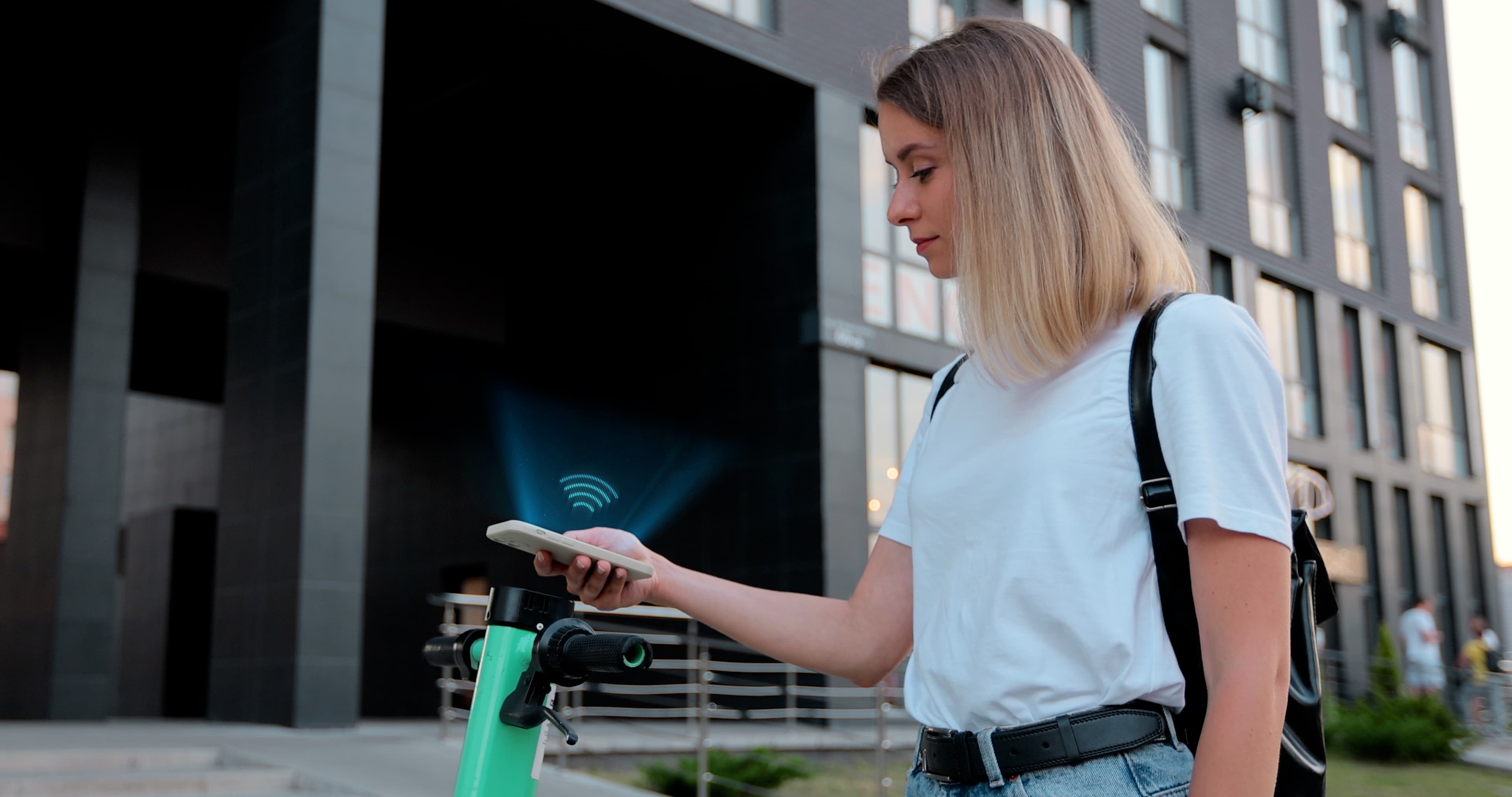
Cities are asking scooter operators for more than a promise that riders should stay off sidewalks. They want concrete controls: sidewalk-riding detection, warnings, speed reduction, enforcement logs, and evidence that the operator can respond when a problem corridor appears.
The technology market is still uneven. A few products are buyable today. Several high-profile systems are internal to large operators. Some lower-cost approaches can help with education and analytics, but are not strong enough to promise city-grade enforcement by themselves.
This guide breaks the options into the categories that matter for an operator choosing a practical path in 2026.
The Short Version
For a small or mid-sized scooter fleet that needs a credible city response, the strongest shortlist is:
1. Drover AI PathPilot for a retrofit or vendor-led computer-vision pilot.
2. Luna Systems ARAS where visual evidence, analytics, and Segway integration matter.
3. Segway Pilot Lite / S90L / Pilot Edge hardware if you are buying new vehicles or can retrofit compatible hardware.
GNSS and sensor-fusion approaches are attractive because they avoid cameras, but they need precise mapping, high-grade positioning, and custom engineering. IMU-only approaches are useful as a low-cost education layer, not as a standalone compliance promise.
What Sidewalk Detection Actually Needs To Do
A city generally cares about four outcomes:
- Detect likely sidewalk riding in real time.
- Warn the rider or slow the vehicle without creating a crash risk.
- Log events so the operator can identify hotspots and repeat offenders.
- Provide a credible response plan for permit renewals, council questions, and public complaints.
Traditional GPS geofencing is not enough for sidewalk riding. A street lane and sidewalk can be only a few feet apart. Consumer GPS often cannot separate them reliably, especially downtown, near trees, beside buildings, or in bad weather.
That is why the serious options use onboard computer vision, high-accuracy sensor fusion, or a combination of camera, map, IMU, wheel-speed, and GNSS signals.
Vendor And Approach Matrix
| Option | Method | Buyable by independent operators? | Best fit | Main tradeoff |
|---|---|---|---|---|
| Drover AI PathPilot | Onboard camera plus edge AI | Yes | Retrofit pilot or safety-compliance program | Camera/privacy review and hardware cost |
| Luna Systems ARAS | Computer vision plus rider-assistance analytics | Yes / partner-led | City reporting, evidence, Segway deployments | Commercial diligence and local validation |
| Segway Pilot Lite / S90L / Pilot Edge | OEM AI camera platform | Yes with compatible Segway hardware | New vehicle procurement | Locks you into compatible hardware |
| Bird + u-blox style sensor fusion | GNSS, IMU, dead reckoning, precision maps | Not turnkey | Large custom fleet engineering | Mapping burden and custom implementation |
| Lime Vision / Neuron / Veo systems | Operator-owned camera AI | No, operator-internal | Benchmarking city expectations | Not available as standalone software |
| Phone or scooter IMU models | Surface/vibration classification | Custom / prototype | Low-cost warnings and analytics | Weaker reliability and often not real time |
| Parking visual positioning | Rider phone camera / VPS | Sometimes | Parking compliance | Not true in-ride sidewalk detection |
1. Drover AI PathPilot
Drover AI is the clearest third-party option for operators who want a pilot-ready system. PathPilot uses a camera and onboard compute to classify whether the scooter is on a road, bike lane, or sidewalk. Public materials describe audible warnings and speed control when the system detects pavement or sidewalk riding.
This matters because the decision happens at the vehicle, not after a delayed cloud GPS lookup. The system is designed for real-time feedback and can generate useful compliance data for operators and cities.
Best for: a 10-25 scooter pilot in the specific corridors where complaints happen first.
Watch-outs: camera privacy questions, hardware mounting, weather exposure, vandalism risk, and local false positives. Run warnings before automatic slowdowns so you can learn where the model struggles.
2. Luna Systems ARAS
Luna Systems builds computer-vision Advanced Rider Assistance Systems for micromobility. Luna has positioned its technology around lane, sidewalk, pedestrian, parking, and post-ride analytics use cases, and has been part of the Segway ecosystem for S90L / Pilot Edge deployments.
Luna is compelling when a city wants proof, not just prevention. Visual event evidence and hotspot analytics can help an operator show where sidewalk riding occurs repeatedly and where infrastructure or rider education would help.
Best for: city-facing programs where reporting, evidence, and safety analytics are as important as immediate rider correction.
Watch-outs: confirm the exact hardware package, supported scooter models, data retention policy, privacy treatment, and whether the model has been validated in your type of streetscape.
3. Segway Pilot Lite, S90L, and Pilot Edge
Segway's commercial scooter platform is important because it can make sidewalk detection part of the vehicle stack instead of a fragile aftermarket project. The Segway S90L and Segway Pilot Lite materials describe AI-powered detection features such as sidewalk, lane, parking, and pedestrian detection, with configurable actions such as prompts, automatic deceleration, or uploaded event data.
Segway has also publicly partnered with Drover AI and Luna Systems to bring computer vision options onto its AI-enabled vehicles. That makes Segway hardware a strong procurement path even if you choose Drover or Luna as the algorithmic layer.
Best for: buying new shared scooters or standardizing a fleet around one OEM safety platform.
Watch-outs: do not treat generic OEM claims as enough. Ask which algorithm runs on your SKU, what data exports are available, how enforcement actions are configured, and whether the feature is enabled in your target country.
4. Bird And u-blox Style Sensor Fusion
Bird's Smart Sidewalk Protection, built with u-blox, shows another path: high-accuracy positioning, dead reckoning, IMU/wheel-speed inputs, and centimeter-level sidewalk maps. Bird's own writeup says the system combines sensor fusion with precision sidewalk mapping rather than relying on ordinary GPS.
The upside is privacy: no forward-facing camera. The downside is operational complexity. You need precise map data, suitable hardware, calibration, and a software team capable of maintaining the system.
Best for: large operators that own the vehicle firmware and have the engineering budget to build a city-specific mapping pipeline.
Watch-outs: this is not a simple add-on for most independent fleets.
5. Operator-Internal Systems: Lime, Neuron, Veo, And Others
Large operators have built or announced their own sidewalk-riding detection systems. Lime describes sidewalk riding detection as part of its innovation stack. Neuron, Veo, and others have public case studies or city deployments around AI safety systems.
These are useful benchmarks because city staff read about them and may ask why every scooter program cannot do the same thing. But they usually are not products an independent operator can buy.
Best for: setting city expectations and understanding where the industry is going.
Watch-outs: do not cite an operator-internal system as your implementation plan unless you are actually using that operator.
6. IMU, Vibration, And Acoustic-Like Detection
Lower-cost approaches use scooter IMU data, phone motion data, vibration signatures, or road-surface classification models. Lime has published engineering notes about sidewalk riding detection using sensor data, and academic work continues in this area.
These systems are appealing because they can use sensors the scooter already has. They are also privacy-friendly. The problem is reliability. Road surfaces vary by city, season, weather, maintenance, tire type, and vehicle model. Many systems are better at post-trip classification than real-time enforcement.
Best for: education, rider scoring, warnings, and hotspot analytics.
Watch-outs: weak as the only answer to a council or permit board asking for real-time sidewalk prevention.
7. Parking Visual Positioning Is Different
Some technology uses the rider's phone camera or visual positioning to confirm parking. Fantasmo-style parking validation, Google ARCore parking flows, and end-of-ride photo AI can reduce blocked-sidewalk parking.
That is valuable, but it is not the same as detecting sidewalk riding during a trip.
Use parking visual positioning when the city complaint is about where scooters are left. Use onboard sidewalk-riding detection when the complaint is about riders traveling on sidewalks.
Recommended Deployment Plan
If you need a credible, near-term response for a city like Antigonish, start small and prove it.
Phase 1: Policy And Software Controls
Before buying hardware, configure the controls you already have:
- No-go zones where the city can provide exact polygons.
- Speed-limit zones for downtown, school, trail, or park areas.
- Operating-hour restrictions for late-night complaint windows.
- Parking-zone enforcement and end-of-ride photo checks where appropriate.
These do not solve sidewalk riding alone, but they show immediate action and reduce adjacent issues.
Phase 2: Computer Vision Pilot
Run a Drover AI or Luna pilot on the scooters most likely to operate in complaint corridors. Start with alerts and event logging before automatic slowdowns. Measure:
- Sidewalk-riding detections per 100 rides.
- Repeat hotspots.
- False positives.
- Rider response to warnings.
- Support tickets and city feedback.
Phase 3: Procurement Decision
If the pilot works, choose between retrofit and OEM-standardized hardware:
- Retrofit if the current fleet is young and compatible.
- Segway S90L / Pilot Edge style hardware if you are refreshing vehicles.
- Avoid custom GNSS/sensor-fusion unless you have a strong engineering reason.
Procurement Questions To Ask Vendors
Before signing a pilot, ask:
- What exact hardware is installed on the scooter?
- Does detection happen onboard or in the cloud?
- What happens when sidewalk riding is detected: beep, app alert, speed reduction, trip flag, or all of these?
- Can the operator configure enforcement by city zone?
- What event data exports are available?
- Does the system integrate with MDS, GBFS, or an operator API?
- What is the false-positive process?
- How does it handle night, rain, snow, shadows, bike lanes, brick sidewalks, and mixed-use paths?
- What privacy controls exist for image capture, retention, and access?
- Which scooter models and IoT controllers are supported?
Bottom Line
For most independent scooter operators, the practical answer is not to build sidewalk detection from scratch. Start with software controls and geofencing, then pilot a buyable computer-vision system where the city is most concerned.
If you are buying new hardware, prioritize Segway-compatible AI safety options and evaluate Drover AI or Luna Systems as the detection layer. If you are keeping an existing fleet, start with a small retrofit pilot and use the data to decide whether fleet-wide rollout is justified.
FAQ
What is the best sidewalk riding detection system for scooter fleets?
For most independent fleets, Drover AI and Luna Systems are the strongest third-party options, especially when paired with Segway Pilot Lite, S90L, or Pilot Edge hardware. The best choice depends on whether you need retrofit hardware, OEM integration, visual evidence, or city reporting.
Can normal GPS detect sidewalk riding?
Not reliably. Ordinary GPS often cannot distinguish a road lane from an adjacent sidewalk. Sidewalk detection usually needs onboard computer vision, high-accuracy GNSS with precise maps, sensor fusion, or a combination of signals.
Do cameras create privacy issues?
They can. Any camera-based system needs a clear privacy review: what is captured, whether images are stored, who can access them, how long data is retained, and how the operator communicates the feature to riders and cities.
Can Levy Fleets enforce sidewalk rules without new hardware?
Levy Fleets can enforce operating boundaries, no-go zones, speed zones, parking zones, end-of-ride photo checks, and operating hours. True real-time sidewalk riding detection usually requires additional vehicle-side hardware or an OEM AI platform.
Ready to evaluate sidewalk-riding controls? Book a demo. You can also review speed limit zones, parking rewards and parking zones, and fleet operating settings.